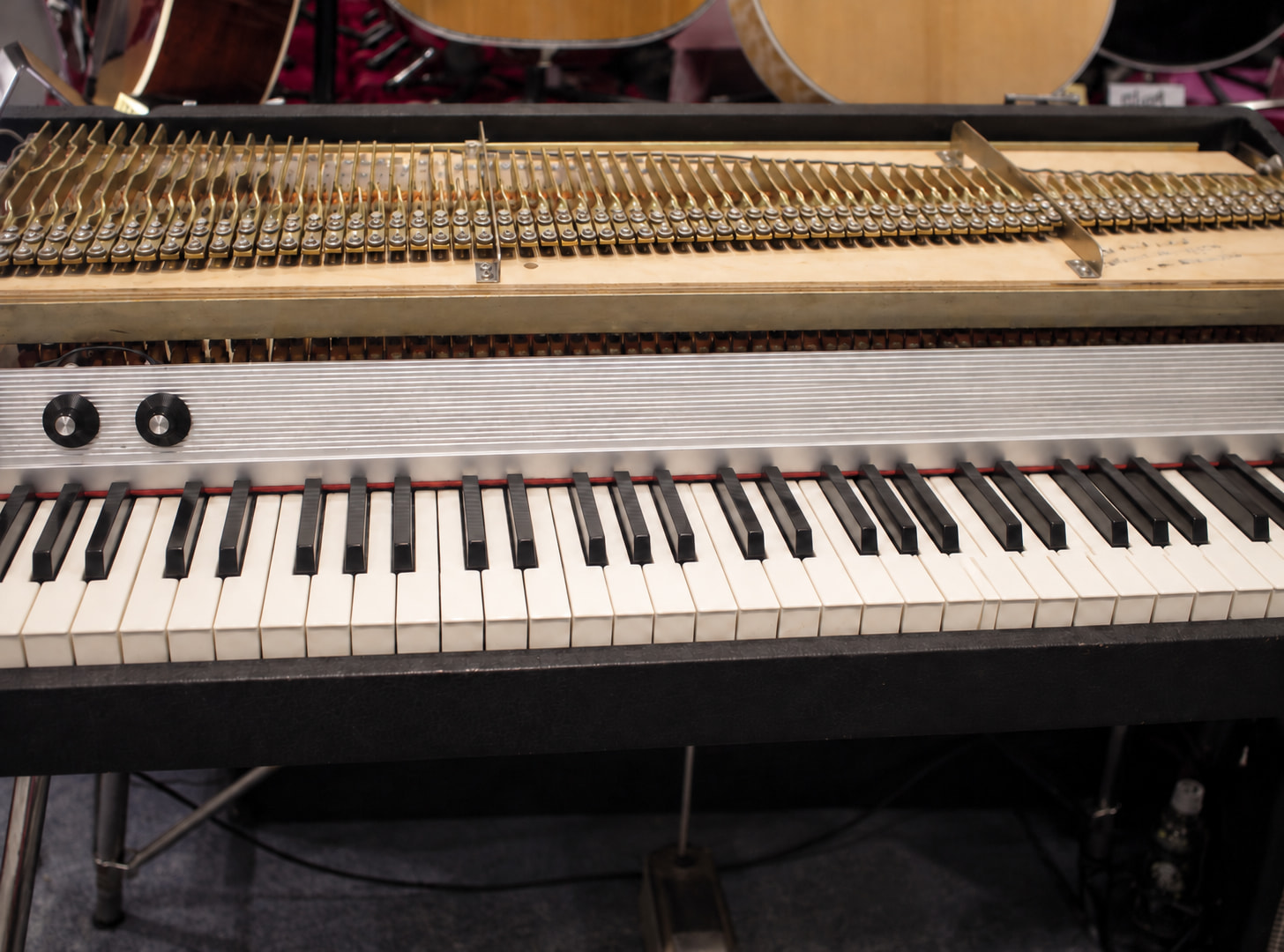
The complaint was straightforward: one note disappeared inside a chord. On this Rhodes Mark I Stage 73, E4—the E above middle C—sounded noticeably weaker than D-sharp and F. Playing harder produced more attack, but the body of the note still fell away too quickly. There was no crackle, distorted buzz or obvious mechanical rattle. At first, it sounded like uneven pickup adjustment.
Before opening the piano, I removed the effects chain, used a known-good cable and listened through a clean amplifier with neutral EQ. I then tried a high-impedance interface input with all processing disabled. E4 remained the outlier. That ruled out the original cable, amplifier and effects as the cause of the imbalance.
Next, I connected the harp’s RCA output directly to the same high-impedance input, bypassing the Stage’s passive controls and internal output lead. Overall level changed, so I compared E4 with its neighbours rather than comparing absolute levels between connections. The same weakness remained. The fault was upstream of the controls.
With the cover removed, I checked hammer-tip condition, hammer travel and damper clearance. The hammer struck cleanly and rebounded normally. Holding the sustain pedal down, with the damper visibly clear, did not restore the missing sustain. Nothing suggested that the key was delivering an unusually weak blow.
My first adjustment was a small, reversible reduction in pickup distance. It made the attack louder, exactly as expected, but the note still collapsed early. I returned the pickup to its starting position. More output was disguising the symptom without repairing it.
The useful comparison came with the amplifier muted. With the dampers raised, I gently plucked E4 and its neighbours. E4 still had a noticeably shorter acoustic ring. That shifted attention from the pickup to the vibrating assembly itself. A pickup fault alone could not explain the short unamplified decay.
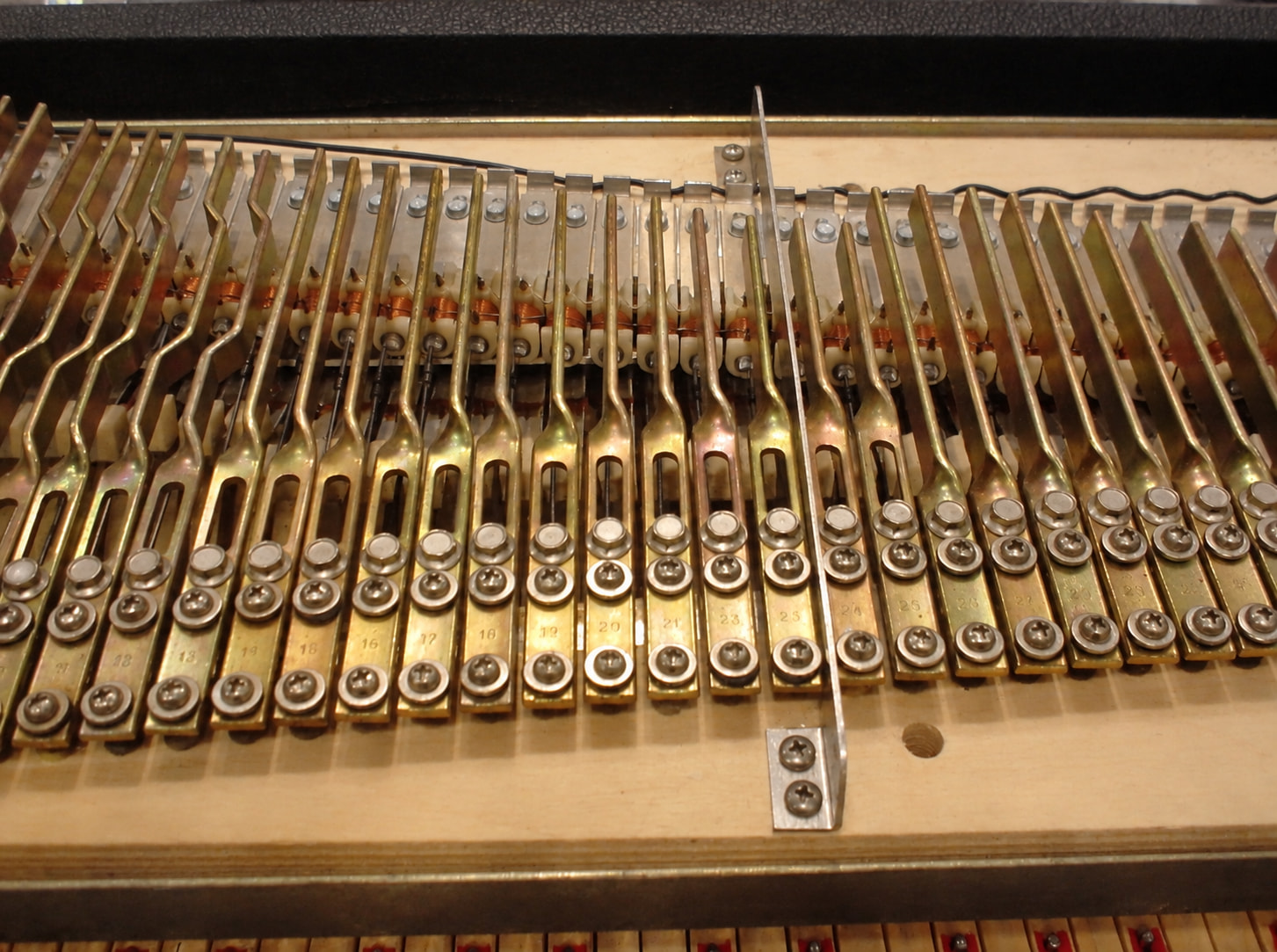
The tine was intact, and neither it nor the tonebar touched an adjacent assembly. The mounting told a different story. One rubber tonebar grommet had deformed around its screw, leaving the screw shank in contact with the edge of the tonebar hole. On removal, the displaced rubber and contact mark were visible. The assembly had lost part of its mechanical isolation.
I replaced both grommets on that assembly with Rhodes-specific parts matched to the mounting screws. The screws were straight and undamaged; the springs and washers were correctly seated and remained serviceable. I retained those components, then restored the assembly’s height and checked escapement, damper clearance, tine-to-pickup alignment and volume. Tuning was checked last.
Replacing the pickup would have addressed the wrong part of the signal path. Moving it closer could increase level, but could not restore the assembly’s freedom to vibrate. Replacing the tine was also unjustified: once properly isolated, the original assembly rang freely again. The grommets were the smallest repair that addressed the demonstrated fault.
For the final check, I repeated soft, medium and firm strikes through the normal output, with and without sustain pedal. I also recorded the same short phrase before and after at unchanged gain, without compression or normalisation. E4 now carried through the chord and decayed naturally beside its neighbours. Repeated firm playing did not upset the adjustment, and key release still stopped the note cleanly.
What mattered here was listening beyond the attack. A note can be electrically louder and still be mechanically unhealthy. Comparing its unplugged decay with neighbouring notes prevented a simple mounting fault from becoming an unnecessary pickup replacement.